
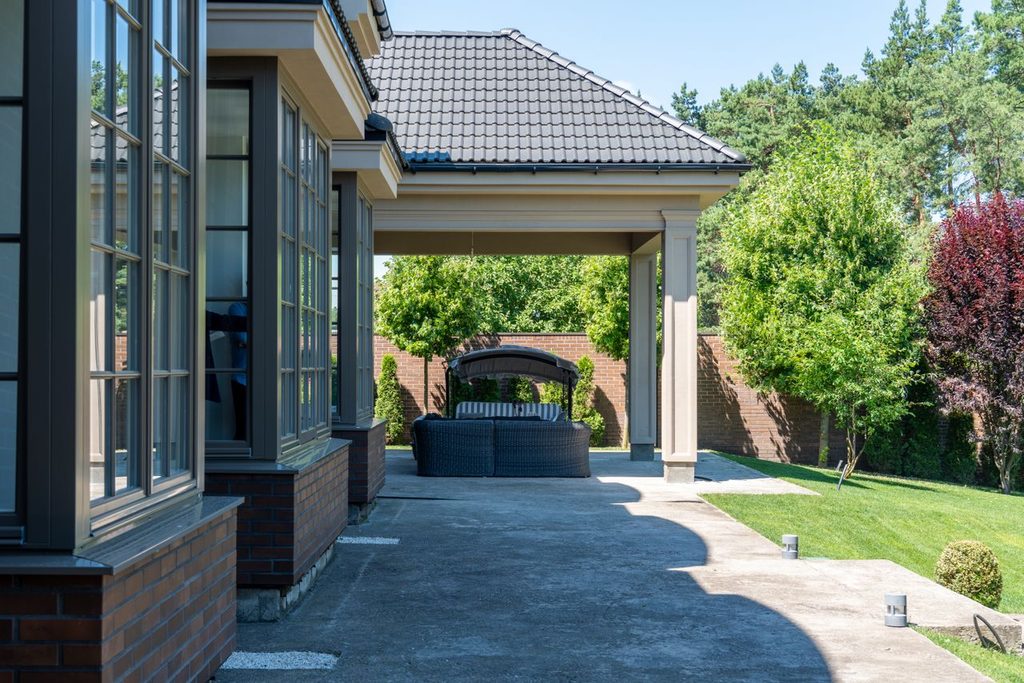
When homeowners think about adding value to their property, the first projects that come to mind are often kitchens, bathrooms, or fresh interior paint. But there is another part of the home that can make a strong impression long before anyone walks through the front door: the landscape.
Well-planned landscaping and hardscaping can improve curb appeal, make outdoor spaces more useful, and—when properly designed—support the condition of the home itself.
Start With the Basics: Drainage and Grading
A beautiful yard is only an asset if it manages water properly. In the Pacific Northwest, where wet weather is a regular part of the equation, drainage deserves particular attention.
The ground around a home should usually direct water away from the foundation rather than toward it. Gutters and downspouts should discharge water safely, and landscaping should not block drainage paths or create areas where water collects against the house.
Before investing in decorative features, address standing water, poor grading, damaged drainage systems, or soil that has built up against siding. Correcting these issues may not be the most glamorous improvement, but it can protect the home from moisture-related problems.
Make Outdoor Space More Usable
Hardscaping can turn an ordinary yard into functional living space. A well-designed patio, walkway, retaining wall, or set of steps can improve how people move through and use the property.
Consider creating defined areas for dining, relaxing, gardening, or entertaining. Quality materials and thoughtful placement generally have more lasting appeal than simply adding as many features as possible.
Walkways should also be stable, reasonably level, and designed to shed water. Loose pavers, uneven surfaces, and poorly constructed steps can become maintenance and safety concerns rather than improvements.
Choose Landscaping That Fits the Property
Plants can add color, privacy, shade, and visual interest, but bigger is not always better. Trees and shrubs should be selected and positioned with their mature size in mind.
Large vegetation planted too close to the home can eventually interfere with roofs, siding, gutters, foundations, or utility lines. Roots and constantly damp soil can also create maintenance challenges.
A landscape that looks attractive while leaving appropriate clearance around the home is generally a more practical long-term investment.
Think Beyond Curb Appeal
The most valuable landscape improvements are not necessarily the most expensive. Good design, proper installation, drainage, durable materials, and manageable maintenance can matter more than creating an elaborate outdoor display.
A homeowner considering a landscape upgrade should look at the property as a whole. Does the yard complement the architecture? Does it manage rainwater? Are walkways safe? Can the features be maintained without becoming a burden?
The best landscaping and hardscaping improvements do more than make a home look good. They help the property function better.
And that is where outdoor improvements can provide real value: creating a home that is attractive, practical, durable, and easier to care for—qualities that tend to stand out long after the first impression.